Website Development Timeline: How Long Does It Really Take to Build a Website?
~ By Zubin Souza
19 February, 2026
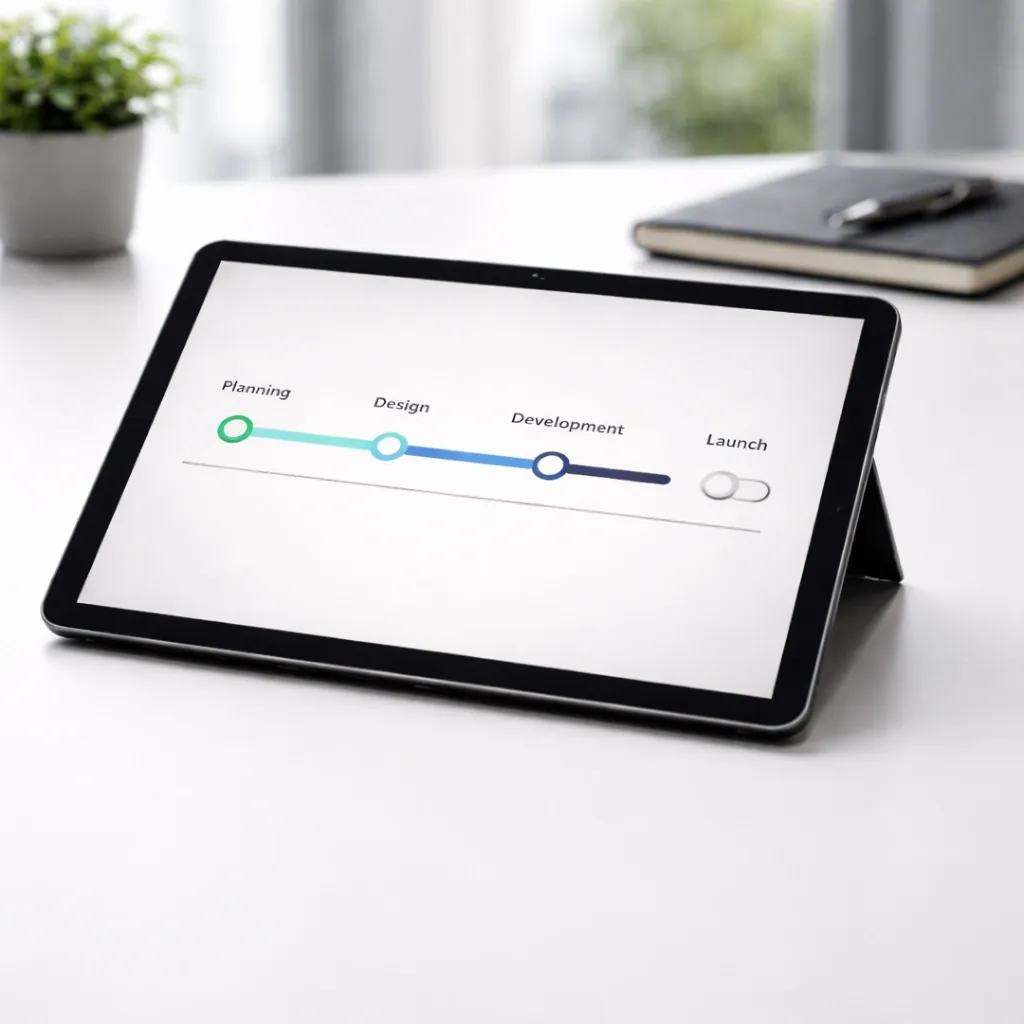
Timeline is one of the most consistently misunderstood parts of web development. Clients expect weeks. Agencies quote months. Projects run over both estimates. Nobody is entirely sure why.
The truth is that how long a website takes to build depends on a handful of variables that are almost always underweighted at the start of a project. This guide gives you a realistic picture of what those variables are, how long each phase of development actually takes and what you can do to keep a project moving at the pace it should.
Why Timelines Are So Often Wrong
Most website timeline estimates go wrong for one of three reasons:
- Scope is not defined precisely enough at the start. A vague brief produces a vague estimate. When the details emerge during development, the timeline expands to accommodate them. This is not the development team moving slowly. It is the project discovering its actual size.
- Client-side delays are not accounted for. Content, feedback rounds, approvals and decisions all require time from the client. Most timeline estimates assume instant responses. Real projects do not work that way.
- Complexity is underestimated. A website that looks simple on the surface can have significant backend complexity, integration requirements or custom functionality that takes time to build correctly.
Understanding these three sources of delay is the first step to building a realistic timeline before work begins.
The Five Phases of Website Development
A well-managed website project moves through five distinct phases. Each has its own timeline drivers and its own risks to delivery speed.
Phase 1: Discovery and Scoping
Before design or development begins, the project needs a clear definition of what is being built. Discovery involves understanding the business goals, mapping the site structure, defining the required functionality and documenting technical requirements in enough detail to produce an accurate estimate.
For a straightforward marketing website, discovery takes 3 to 5 days. For a complex web application with custom functionality, it can take 2 to 4 weeks and is worth every day spent. Projects that skip proper discovery almost always take longer overall because they spend development time re-scoping work that should have been defined upfront.
Phase 2: Design
The design phase covers information architecture, wireframing and visual design. Its duration is primarily determined by the number of unique page templates required and the complexity of the design system being created.
A standard marketing website with 6 to 10 page types typically takes 2 to 4 weeks to design. A custom web application requiring a full design system with component libraries and multiple user flows can take 4 to 8 weeks.
The biggest delay risk in the design phase is feedback cycles. A feedback round that takes a week to receive adds a week to the timeline before a single revision is made. Fast, consolidated feedback from a single decision-maker is one of the most effective things a client can do to keep a project on schedule.
Zunderdog's UI/UX design team structures design reviews to minimise revision cycles: presenting work at defined milestones with clear feedback frameworks that prevent the open-ended iteration that inflates design timelines.
Phase 3: Development
Development is where the actual building happens. It is also where timeline estimates are most often wrong because development complexity is harder to estimate than design complexity.
Here are realistic development timelines by project type:
- Simple marketing website (5 to 10 pages, standard functionality): 3 to 5 weeks
- Content-rich marketing site with CMS (15 to 30 pages): 5 to 8 weeks
- Custom web application MVP: 8 to 14 weeks
- Full-scale web application (multiple user roles, integrations, complex backend): 16 to 30 weeks
- eCommerce site (standard platform implementation): 6 to 10 weeks
- Custom eCommerce platform: 14 to 24 weeks
These ranges assume a clear scope, approved designs and a client who provides timely feedback and content. Missing any of those conditions extends the timeline proportionally.
Phase 4: Content Integration and QA
Content integration is the phase that surprises most clients. Populating a website with real content, images, copy, video and documents takes meaningful time, particularly when content needs to be created or sourced rather than simply migrated from an existing site.
Content integration and QA together typically add 1 to 3 weeks to a project depending on volume. QA covers functional testing across browsers and devices, performance checks, accessibility review and bug resolution. Skipping or rushing QA is a predictable source of post-launch problems.
Phase 5: Launch and Post-Launch
Launch involves final deployment, DNS configuration, SSL setup, redirect mapping, analytics verification and a structured go-live checklist. For a well-prepared project, launch day itself takes 1 to 2 days.
Post-launch, plan for a 2 to 4 week period of monitoring and minor fixes. No website ships without small issues that only become visible under real-world traffic and usage. Budget time and expectation for this phase rather than treating launch as the end of the project.
What Slows Projects Down
Beyond the structural phases, these are the most common causes of timeline overruns across website projects:
Late or Incomplete Content
Content is consistently the single biggest source of delay on website projects. Development can build the structure but it cannot fill it. A development team waiting on copy, images or product data is a development team not moving forward.
Treat content production as a parallel workstream that begins at the same time as design. Have a content delivery date agreed in writing before development starts.
Scope Changes During Development
New requirements that emerge during development are normal. How they are handled determines their impact on timeline. A change request process that evaluates each addition against the project timeline and budget prevents the accumulation of small changes that collectively push a launch date by weeks.
Too Many Stakeholders in the Feedback Loop
Feedback from five stakeholders takes longer to consolidate than feedback from one. And consolidated feedback from five people is often contradictory, requiring additional rounds to resolve. Designate a single decision-maker for design and content feedback. It is one of the highest-leverage things you can do for timeline.
Unplanned Third-Party Integrations
Integrations with third-party systems, CRMs, payment gateways, booking systems, ERPs, are among the most time-variable development tasks. Well-documented APIs with sandbox environments integrate quickly. Poorly documented APIs with no sandbox require significant trial and error. Identify all required integrations during discovery and research their technical requirements before finalising the development timeline.
How to Give Your Project the Best Chance of Hitting Its Timeline
The clients whose projects consistently deliver on time share a few behaviours:
- They invest in discovery. A properly scoped project has fewer surprises during development. Time spent defining requirements precisely before work begins is returned several times over during the build.
- They have content ready. Or they have a plan to produce it that does not depend on development being finished first.
- They give fast, consolidated feedback. One round of feedback from one person beats three rounds of feedback from a committee every time.
- They resist scope expansion during build. Good ideas that surface during development go on a v2 list, not into the current scope.
- They treat launch as a milestone not a deadline. A launch date that cannot move for external reasons creates pressure that leads to shortcuts in QA and content. A launch date that is target-driven and adjustable keeps quality high.
Timeline and Cost Are Connected
Timeline and budget are directly linked. Longer projects cost more. Projects with unclear scope cost more because they take longer. Understanding what drives timeline is therefore also understanding what drives cost.
For a detailed breakdown of what web development costs in 2026, read: How Much Does It Cost to Build a Web Application in 2026?
If your primary goal is speed to market on a first version, read: MVP Development Guide: How to Build, Launch and Validate Your Product in 90 Days.
What Zunderdog Builds and How We Manage Timelines
Zunderdog's web development and custom web development teams work with clients who value predictable delivery as much as quality output. We invest heavily in discovery and scoping before development begins because we know that the projects that deliver on time are almost always the ones that were defined precisely before the first sprint started.
We provide milestone-based project plans at the start of every engagement, regular progress updates during development and a structured launch process that minimises the risk of post-launch surprises.
Conclusion
There is no universal answer to how long a website takes to build because there is no universal website. What there is: a predictable set of phases, a known set of timeline risks and a clear set of behaviours that keep projects on track.
Use this guide to set realistic expectations before a project begins. Invest in discovery, prepare your content early, consolidate your feedback and resist the temptation to expand scope mid-build. Do those things and your project will run closer to its estimate than most.
If you want to discuss your specific project and get a realistic timeline assessment, talk to the Zunderdog team. We will give you an honest picture of what it takes to build what you are planning.