MVP Development Guide: How to Build, Launch and Validate Your Product in 90 Days
~ By Zubin Souza
24 January, 2026
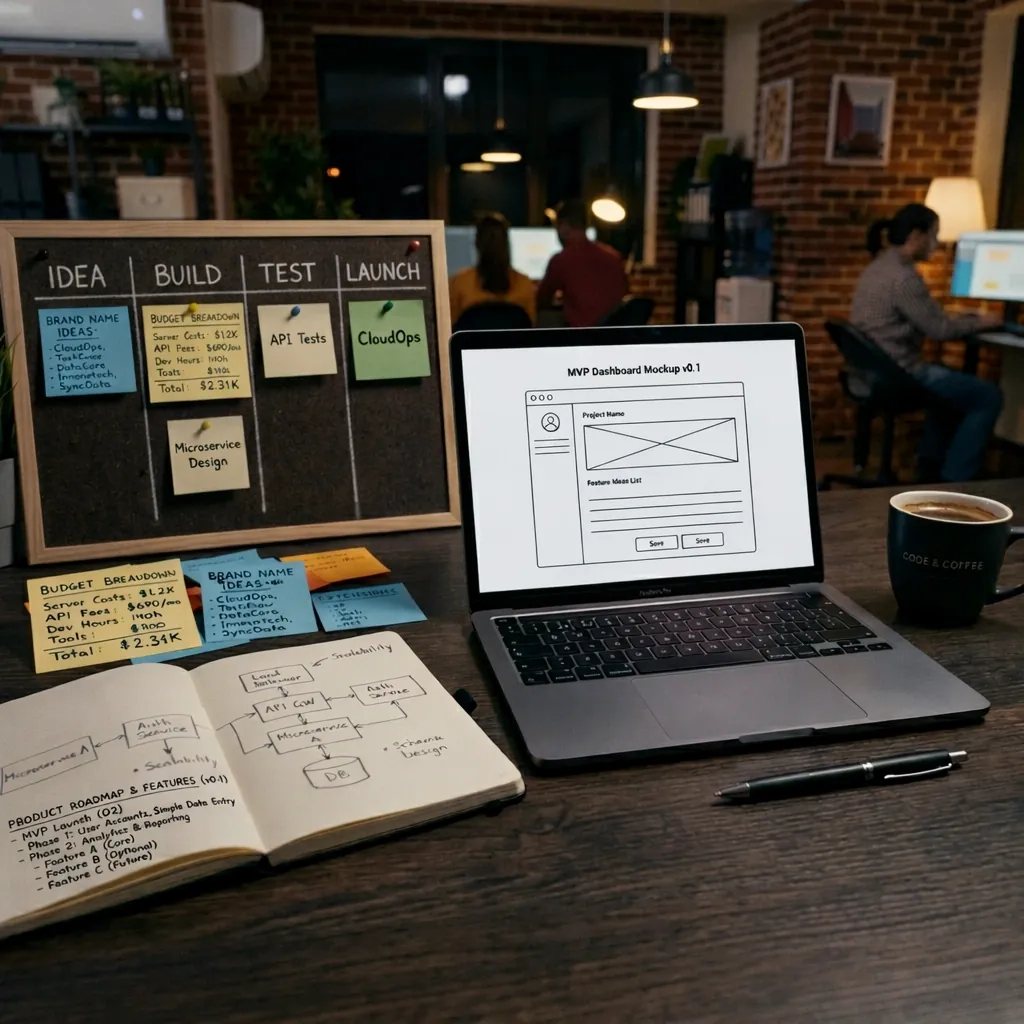
Most founders spend too long building before they have any real evidence that anyone wants what they are making. The MVP exists to fix that. It is not a half-finished product. It is a deliberately scoped first version designed to answer one question as fast and cheaply as possible: does this work?
This guide covers everything you need to know about building, launching and validating an MVP in 90 days. Not as a theoretical framework but as a practical sequence of decisions and actions that get a real product in front of real users quickly.
What an MVP Actually Is (and what It Is Not)
The term minimum viable product gets misused constantly. It does not mean a buggy prototype. It does not mean shipping something you are embarrassed by. And it definitely does not mean building every feature on your roadmap at lower quality.
An MVP is the smallest version of your product that delivers real value to a real user and generates real signal about whether your idea has legs.
The key word is viable. It has to work. It has to solve a problem clearly enough that someone chooses to use it. Everything beyond that is scope you do not need yet.
What an MVP is not:
- A mockup or a prototype (those are validation tools but not an MVP)
- A full product with every feature cut to 50 percent quality
- Something you need to be proud of showing at a conference
- A final commitment to a particular technology or architecture
Why 90 Days
Ninety days is the right forcing function for most MVPs. It is long enough to build something real and short enough to maintain urgency throughout. Projects without a clear deadline expand to fill whatever time is available. A 90-day target keeps scope honest.
It also aligns with how early-stage funding and runway typically work. If you have 6 to 12 months of runway, spending 90 days to get to a validated MVP leaves you enough time to iterate before your next raise.
Some MVPs can be built faster. Some legitimately require more time. But 90 days is a useful default that works for the majority of web and mobile product builds.
Phase 1: Define (Weeks 1 to 2)
Before a line of code is written, you need clarity on three things: the problem you are solving, the user you are solving it for and the single core workflow that proves your solution works.
Identify the Core Problem
Write down the problem your product solves in one sentence. If you need more than one sentence, you have not scoped it tightly enough yet. The more precisely you can define the problem, the more precisely you can define the solution.
Define Your Primary User
Who is the one type of person this MVP is built for? Not all potential users. The primary user. What do they do today without your product? What friction does that create? What would they give up to remove that friction?
The tighter your user definition, the better your MVP will be. Building for everyone means optimising for no one.
Map the Core Workflow
Every product has one workflow that is more important than all others. The workflow that, if it works well, makes the product worth using. Map that workflow end to end. This is your MVP scope. Everything else is v2.
Write a Scope Document
Produce a written scope document that lists every screen, every user action and every data point your MVP needs. Then go through it and cut everything that is not essential to the core workflow. A good rule: if you can imagine launching without it, cut it.
Phase 2: Design (Weeks 2 to 4)
Design is where your MVP becomes real before development begins. A well-designed MVP is faster and cheaper to build because the development team is not making interface decisions on the fly.
User Flows First
Start with user flows, not visual design. Map out exactly how a user moves through your product from entry to completion of the core workflow. Identify every decision point and every potential drop-off.
Wireframes Before Visual Design
Wireframes are low-fidelity layouts that establish structure without committing to visual detail. They are fast to produce and easy to change. Get wireframes reviewed and approved before moving to visual design. Changes at wireframe stage cost minutes. Changes at development stage cost days.
High-Fidelity Screens for Core Flows
For an MVP, you do not need pixel-perfect design for every screen. Focus high-fidelity design effort on the core workflow screens. Secondary screens and edge cases can be handled with clean, functional design rather than bespoke visual work.
Zunderdog's UI/UX design team works with founders to produce design systems that are fast to build from and easy to extend as the product grows.
Phase 3: Build (Weeks 4 to 10)
The build phase is where most MVPs go wrong. Scope creep, technology decisions made under pressure and insufficient communication between design and development all add time and cost without adding value.
Choose the Right Tech Stack
Your tech stack should be chosen based on what gets you to market fastest while leaving room to scale. For most web-based MVPs, a React or Next.js frontend paired with a Node.js or Python backend and a managed cloud database is a solid default.
For a deeper look at how to choose the right technologies for your product, read: Startup Tech Stack Guide: How to Choose the Right Technologies in 2026.
Build the Backend First
Start with the data model and backend logic before building the frontend. A well-designed backend makes everything else faster. A poorly designed one creates debt that compounds throughout the project.
Zunderdog's Backend, Cloud and DevOps team architects systems with scale in mind from the first commit, not as an afterthought when traffic arrives.
Build in Vertical Slices
Rather than building the entire frontend before touching the backend, build in vertical slices: one complete feature at a time, from database to UI. This keeps the product in a testable state throughout development and surfaces integration issues early.
Resist Scope Creep
During development, new ideas will surface constantly. Some will be genuinely good. Add them to a backlog and ship none of them in v1. Every addition to scope during the build phase extends your timeline and delays validation. The fastest path to learning is shipping what you planned.
Custom vs Template
For most MVP builds, a custom-built web application is the right choice over templates or no-code tools. Templates impose constraints that become expensive to work around as your product evolves. Custom development gives you a codebase you own and can extend cleanly.
That said, if your MVP genuinely only needs what a template provides, use the template. The goal is learning, not architectural purity.
Phase 4: Test (Weeks 10 to 11)
Before you launch to users, your MVP needs to work reliably. This does not mean it needs to be perfect. It means the core workflow needs to be functional, tested and stable enough that early users can complete the key actions without hitting blockers.
Functional Testing
Test every step of the core workflow end to end. Use real data where possible. Document every bug and prioritise fixes by impact on the core workflow.
Cross-Browser and Cross-Device Testing
Test on the devices and browsers your target users are most likely to use. For consumer products, mobile browsers are essential. For B2B products, desktop Chrome and Safari are typically the priority.
Performance Basics
Your MVP does not need to handle millions of users. But it should load in under 3 seconds and not crash under normal use. Run basic performance checks before launch and fix any obvious bottlenecks.
Phase 5: Launch and Validate (Weeks 11 to 13)
Launching is not the end of the process. It is the beginning of the learning process. The goal of your first launch is not growth. It is signal.
Launch to a Small Group First
Do not launch to the world on day one. Identify 20 to 50 people who represent your primary user and give them early access. Watch how they use the product. Where do they get stuck? What do they ignore? What do they come back for?
Measure One Metric
Pick one metric that represents whether your MVP is delivering value. For most products this is some form of retention: do users come back? A product people use once and abandon has not been validated. A product people return to has.
Talk to Users Directly
Analytics tell you what users do. Conversations tell you why. Schedule calls with your early users. Ask open questions. Listen more than you talk. The insights from 10 user conversations will tell you more than 1,000 data points.
Decide: Iterate or Pivot
After your first validation cycle, you have one of three outcomes. Your hypothesis was right and you should build more. Your hypothesis was partially right and you need to adjust. Your hypothesis was wrong and you need to rethink the direction. All three are valid outcomes. The worst outcome is not getting the data to know which one you are in.
How Much Does an MVP Cost?
Cost depends on scope, platform and team. A well-scoped web application MVP built by an experienced team typically costs between $8,000 and $25,000 and takes 6 to 12 weeks to deliver.
For a full breakdown of what drives development costs up or down, read: How Much Does It Cost to Build a Web Application in 2026?
What Zunderdog Builds
Zunderdog works with founders at the MVP stage to scope, design and build first versions of web and mobile products that are fast to ship and built on a foundation that scales. Our web application development process is grounded in first-principles thinking: understand the problem clearly, build the minimum that proves the solution and architect it to grow. When the product needs a team that stays on after launch, founders can hire a dedicated development team.
We have helped founders move from idea to launched product in under 90 days. If you are ready to build, we are ready to talk. And if you already have a product team and just need more hands, you can hire dedicated developers to work inside it.
Conclusion
Building an MVP in 90 days is achievable for most products if you stay disciplined about scope and focused on the one question you are trying to answer. Define the problem tightly, design for the core workflow, build cleanly and launch to real users as fast as possible.
The market will tell you what to build next. Your job is to get in front of the market quickly enough to hear it.
Ready to build your MVP? Talk to the Zunderdog team and we will help you scope, plan and ship it right.